

Meadville's Heros (Civil War)
By: Dylan Kochis
In 1861, a young man named Willard A. Cutter left his family farm in Meadville, Pennsylvania, to join the 150th Pennsylvania Volunteers. Not yet twenty-five, he found himself stationed just three miles from Washington D.C., guarding the very place where President Lincoln lived. Every day, Willard watched the President ride by, standing tall as soldiers saluted their leader. Life at camp was a mix of quiet duty and sudden tension, from catching spies on the roof to hearing distant cannon fire, but Willard stayed spirited.
He wrote to his grandmother, promising to remain happy despite the uncertainty of the Civil War.As the years passed, Willard witnessed history from the front row. In the winter of 1863, he watched crowds swarm the White House to shake a weary Lincoln’s hand and saw the glow of Ford’s Theatre as it went up in flames. Even when he had to skip a holiday feast for guard duty, he kept a smile on his face. By 1865, as the conflict finally neared its end, the mood shifted. Willard and his fellow soldiers from Meadville shared laughs in their tents, joked about chasing camp rats, and watched corn grow in the White House gardens. For the first time, peace felt like a real possibility.The war ended with a grand parade down 14th Street, but the true story lives in the letters Willard sent home.
His words weren't about grand battles; they were about the quiet courage of a farm boy who missed his family. Through every letter, his heart remained in Meadville, holding onto the hope that he would soon walk through his own front door again. Willard and the men of Meadville showed that bravery isn't just about fighting—it’s about keeping your chin up and protecting those you love with humor and grace. They were the true heroes of their time.

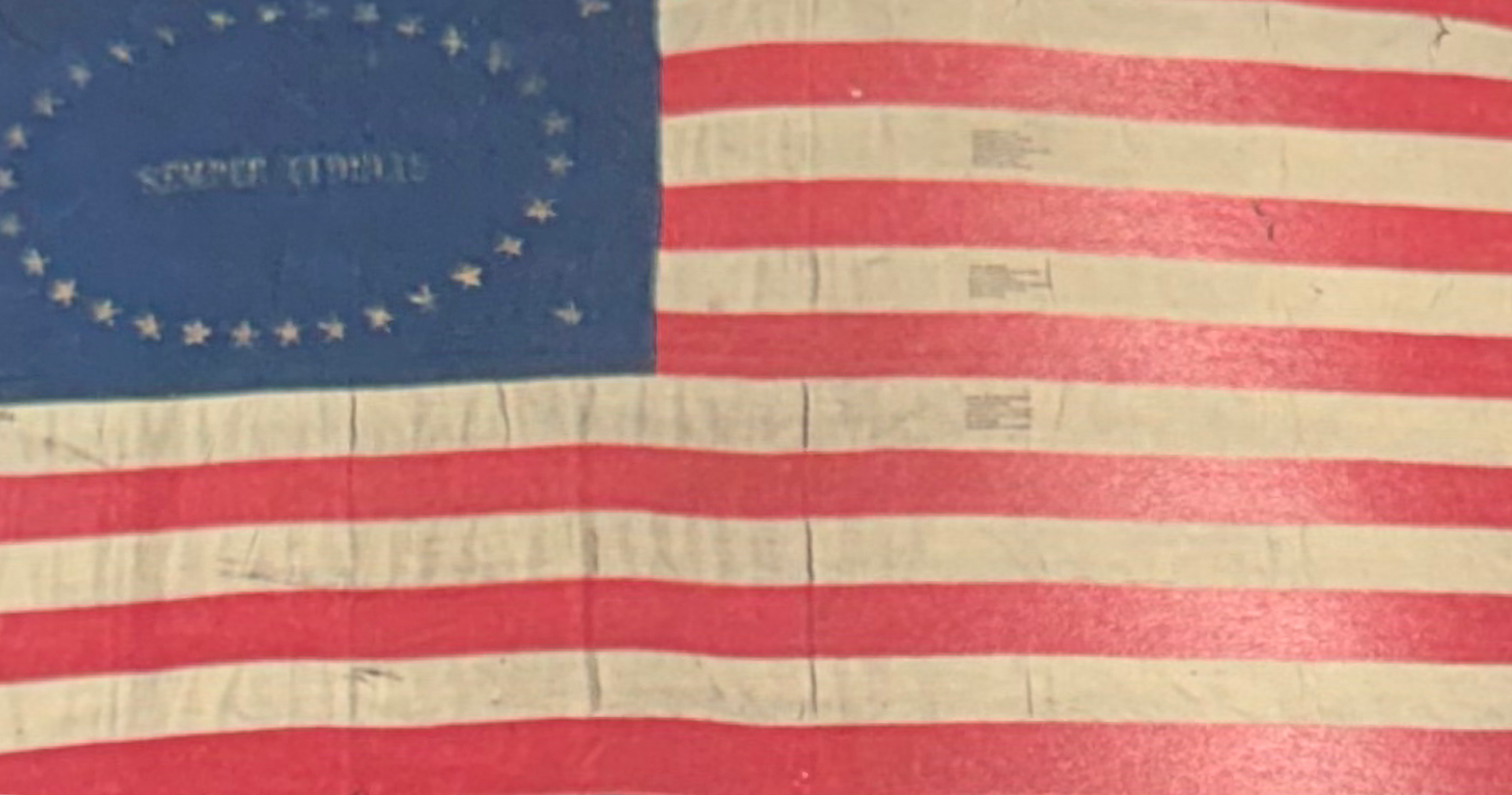
150th Pennsylvania Regiment Flag